

Chief financial officer's report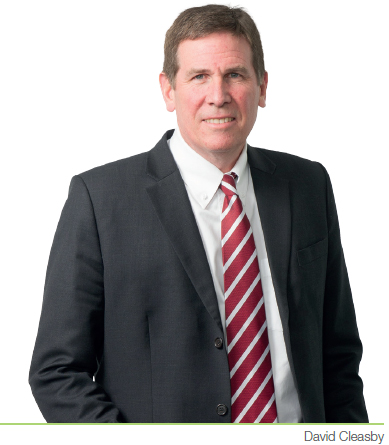
- Headline earnings per share up 32,5% at 1 080,0 cents per share
- Revenue grows by 20,8% to R140,5 billion
- Gross profit percentage rises to 20,8%
- Group trading profit up by 26,1% to R5,2 billion with a trading margin of 3,7%
- Net finance charges fall 11,1% to R294,6 million
- Headline earnings move 32,7% higher to R3,6 billion
- Net debt falls to R1,7 billion
- Cash generated by operations extremely robust
- Dividend of 241,0 cents per share declared
Based on pro forma financial information
Overview
In spite of tough international market trends, trading performance was excellent and cash generation remained strong. Generally, international interest and growth rates remained low and flat, with an increased risk of food deflation in some markets.
Solid performances by teams in Australia, New Zealand, UK Foodservice, Czech Republic, South Africa and China contributed to healthy cash generation and gains in market share. The result was notable for solid organic rather than acquisitive growth.
Volatile markets
Throughout the financial year, markets remained volatile in view of concerns about the effects of negative interest rates in several important jurisdictions, the slowing Chinese economy and Chinese debt levels, depressed commodity prices and volumes, sluggish recovery in many parts of the world and the impacts of central bank stimulus in Japan and the Eurozone.
Acts of terror and political and economic crises in a number of geographies added to nervousness. Meanwhile, the IMF repeatedly cut its world growth forecasts.
Despite these uncertainties, Bidcorp’s management teams remained focused and delivered impressive gains.
Exchange rates
A significant market event like Brexit contributed to volatility in all foreign exchange markets, exposing mismatched corporate asset and liability positions. At Bidcorp, a fundamental risk mitigation strategy is to match both assets and liabilities in their respective currencies in order to avoid a mismatch of this nature and thereby protect Bidcorp’s financial position.
In addition, each business is managed and performance evaluated in its home currency relative to local conditions. Results are then translated into rand, Bidcorp’s functional reporting currency. The translation benefited the overall Bidcorp result in the financial year.
The average rand exchange rate weakened against the basket of Bidcorp currencies. The net result, excluding currency effects, was a pleasing 14,2% gain in profit attributable to shareholders.
Bidcorp listing
The financial community, local and international, reacted positively to our listing and unbundling and the emergence of Bidcorp as a member of the JSE’s “Food Retailers and Wholesalers” sector.
Bidvest shareholders welcomed the opportunity for direct participation in its foodservices operations. From management’s perspective following the listing, access to further capital as Bidcorp remains exciting.
Following the listing at the end of May, Bidcorp shares were actively traded at levels significantly above the initial price of R270 a share. Though our former parent’s share price rerated following the unbundling – in line with market expectations – participating Bidvest shareholders made significant gains on the split as value was unlocked.
Since the listing, Bidcorp shares have been well supported by both institutional and retail investors. An attractive factor within the South African market is the share’s de facto positioning as a solid “rand hedge”. Less than 10% of Bidcorp profit is derived from South African operations, while significant revenue streams are denominated in euro, sterling and Australian dollar.
By year-end, approximately 52% of Bidcorp shares were locally held while the rest were taken up by offshore asset managers and international investors.
 |
See details of the shareholders’ information here . |
Dedication and enthusiasm
Finance teams in every country and continent reacted positively to the creation of Bidcorp despite the additional workload created by the listing and unbundling. Bidcorp prides itself on the expertise and dedication of its finance teams in assisting the businesses to achieve their strategic objectives.
At operational level, strong emphasis was placed on efficiency improvements as the basis for continued organic growth in low-growth economies. Focus next year will be on streamlining and improving group reporting in order to achieve further efficiency gains.
Acquisitions and disposals
Several bolt-on acquisitions were finalised at regional and company level, namely MPD (Czech Republic – R162,0 million) and Caterfood and Cimandis (UK Foodservice – R464,0 million). Disposals include Patleys (Food Africa – R171,3 million) and our minority share in the associate VCN (Netherlands – R51,6 million).
Attention centred on the continued consolidation of Gruppo Dac S.p.A (DAC), acquired in the previous year. In 2016, DAC gave added impetus to growth within Europe.
PCL 24/7 Limited disappointed post-acquisition as margins were squeezed due to labour shortages and higher vehicle accident costs as a result of increased agency labour requirements. In addition, costs of implementing new contracts, surplus depot capacity and abnormal expenses eroded profitability.
Management irregularities were identified and investigated during the year. Some relate to PCL 24/7 Limited, others to operational activities within Logistics. All significantly impacted the division. These irregularities are subject to ongoing legal processes.
Any impact on non-current assets is continually monitored by management. In respect of net operating assets, management has provided for the worst case scenario, notwithstanding recoveries from legal action and insurance claims.
Financial performance
In addition to its actual results, Bidcorp has provided shareholders with pro forma financial information in the annual integrated report to enable a full appreciation of the group’s true performance. The following comments are based on the pro forma information:
The group delivered very pleasing results for the year ended
June 30 2016. Headline earnings per share (HEPS) increased by
32,5% to 1 080,0 cents per share
(2015: 815,2 cents), with basic
earnings per share (EPS) increasing by 26,1% to 1 034,0 cents per
share (2015: 819,8 cents). On a constant currency basis, HEPS
increased by 14,2%.

Revenue grew 20,8% to R140,5 billion (2015: R116,3 billion). Major contributors to the increases were the UK and European operations, reflecting organic growth and assistance from currency effects on translation. Revenue growth was dampened by the deliberate and planned exit of large contract, low margin business in various geographies.
The gross profit percentage increased to 20,8% (2015: 20,3%), reflecting the benefit of the strategy of focusing on the correct mix of business. Operating expenses remained well controlled, increasing by 6,2% on a constant currency basis. The benefits of lower fuel costs were negated by some wage pressure in a number of growing economies and higher sales and distribution costs, reflecting higher activity levels.
Group trading profit increased by 26,1% to R5,2 billion (2015: R4,1 billion) and the trading margin increased to 3,7% (2015: 3,5%), principally reflecting the operational focus in many geographies of growing the independent trade and rebalancing the customer portfolio.
Share-based payment costs declined from R89,9 million to R64,0 million, impacted by the unbundling and the run-off of previous option schemes. Long-term incentivisation remains a cornerstone of management motivation and new allocations to staff have been made.
Acquisition costs of R8,9 million (2015: R43,6 million) reflect minimal acquisition activity as compared to the prior year.
Net finance charges are 11,1% lower at R294,6 million (2015: R331,3 million), reflecting good cash generation despite greater utilisation of working capital. Bidcorp remains well capitalised, with trading profit interest cover at 17,5 times (2015: 12,3 times). We remain conservative in our approach to gearing.
Headline earnings increased by 32,7% to R3,6 billion (2015: R2,7 billion). Net headline earnings adjustments in the year totalled R152,7 million.
The group’s financial position remains strong. Growth in total assets reflects normal levels of replacement, investment capital expenditure on fixed assets and higher trading activity in inventories and receivables.
Bidcorp’s strategic positioning entails continued migration into high-margin areas of the foodservice industry. This highly competitive business-to-business environment necessitates continued innovation that adds value for customers. Investment in new systems, e-commerce platforms, multi-temp facilities and modern infrastructure was therefore constant. Capital expenditure rose to R2,1 billion (2015: R1,7 billion).
Net debt declined to R1,7 billion as compared to R3,3 billion at June 30 2015. Cash generated by operations was extremely robust as was working capital management, despite organic growth and currency impacts on translation. Net working capital days remained in line with the prior year (2015: -1 day).
The capital items that arose during the year totalled R152,7 million, the most material of which relating to write down of the investment in Icelandic Water Holdings ehf of
R119,1 million.
Distribution
As a result of the listing and in accordance with its dividend policy, Bidcorp has declared a dividend of 241,0 cents per share based on the pro forma results, which pertain to the second half of the financial year.
Ratings
Three rating agencies stripped the UK of its AAA rating following the Brexit vote. The EU’s long-term credit rating was also downgraded in the aftermath of the referendum.
South Africa avoided a downgrade of its sovereign credit rating to so-called junk status and remains just one rung above the BBB- level, with a negative outlook.
Markets anticipate such actions and price risk accordingly. However, the risk to these jurisdictions remains the ability to reverse the downward trend by taking hard economic decisions. History has shown that all participants in the economy are impacted by such downgrades.
Currently, Bidcorp does not have an international credit rating. This remains a strategic imperative in the year ahead.
Compliance, communication and regulation
All stakeholders expect regular and transparent communication. Accordingly, we give increasing time and attention to reporting and compliance matters. Executives and management are available to stakeholders, as required, and respond at frequent intervals through various types of engagement.
In our decentralised environment, we demand the highest level of personal integrity from our managers and staff. All personnel subscribe to a Bidcorp value system that stresses the need for honesty and transparency. This value system has always been part of the Bidcorp culture and its DNA.
We believe corporate regulation should take the form of self-regulation based on principles rather than rules. Regulation that proves stifling will result in less, not more, communication.
Taxation
Bidcorp is a multinational entity and each business is self-sufficient in each of its operating jurisdictions, in line with the group’s decentralisation philosophy.
As a result, little inter-company business is conducted and we therefore have only a passing interest in the current global debate about transfer pricing and aggressive tax avoidance practices.
However, wide-ranging and stringent new regulations such as Base Erosion Profit Shifting and country-by-country reporting require companies to be more strategic with a focused approach to internal controls around these matters. Within Bidcorp we estimate our exposure to these issues to be negligible. However, the cost of compliance following a query on such matters can be onerous, especially in terms of management time.
Cost efficiency and shared learning synergies
In all geographies, ongoing focus is applied to identify areas of potential saving. This results in innovation being deployed to drive efficiency gains. Learnings and ideas are shared across our businesses, notably in the e-commerce arena, helping us implement smart solutions faster and with minimal disruption and cost.
The year ahead
Bidcorp made a robust debut in 2016. This creates a sound foundation from which to pursue further growth. Our financial position is strong, free cash flow is good and our people are committed to the vision of being a global leader in the foodservice industry.
We have ample financial resources to pursue opportunities to sustain ongoing organic growth and strategic expansion into appropriate markets.
Interest rates in many countries served by Bidcorp are low and, in some cases, negative. Some fell even lower early in our 2017 year. Where appropriate, we have renegotiated funding arrangements to capture the benefits of these lower rates. We are also undertaking a review of current gearing levels across the group in order to enhance returns, without departing from our fundamental practice of matching assets and liabilities in the same currencies.
Opportunities abound in each of our markets for an entrepreneurially led business like Bidcorp, providing scope for further consolidation and market share gains. Management teams have demonstrated a talent for growth despite difficult environmental circumstances, something that will serve us in good stead going forward.
David Cleasby
Chief financial officer