
Comment
Continuing operations
Bidcorp has again delivered a solid performance for the year considering the volatile economic conditions in many of its operating geographies. Headline earnings per share (HEPS) increased by 12,5% to 1 443,6 cents per share (F2018: 1 282,9 cents), with basic earnings per share (EPS) increasing by 14,8% to 1 451,0 cents per share (F2018: 1 264,0 cents). Currency volatility positively impacted our rand-translated results for the year. Constant currency HEPS grew by 7,7%1.
Trading in most geographies remained positive despite persistent low food inflation and moderate economic growth. Good revenue growth and better gross margins helped offset cost pressures, particularly labour, energy and fuel.
UK Foodservice delivered an excellent performance. Europe continued to perform well, particularly Eastern Europe. Australia's revenue growth remained subdued while continuing to rationalise its exposure to lower-margin customers, however, New Zealand achieved both top-line and margin growth, offsetting cost pressures. In Emerging Markets, South Africa had a stronger second half, despite tough economic conditions. Greater China's performance lagged, however, a recovery was evident in the latter part of the financial year.
1 Constant currency pro forma financial information has been compiled for illustrative purposes only and is the responsibility of the board.
Distribution
Bidcorp has declared a final cash dividend of 330,0 cents per share giving a total dividend for F2019 of 640,0 cents per share, a 14,3% increase on the total F2018 dividend.
Financial overview
Net revenue of R129,3 billion (F2018: R117,7 billion) grew by 9,8% (constant currency growth of 4,7%), reflecting real growth in activity levels. Gross profit percentage increased to 23,9% (F2018: 23,3%), reflecting more freetrade growth in the customer mix which has enabled the Group to trade through the higher cost base.
Despite significant cost pressures in wages, fuel and energy, food inflation in our core foodservice markets remains low.
The Group's overall cost of doing business (operating costs) increased to 18,7% (F2018: 18,3%) on higher sales and distribution activity, a larger invested operational capacity base and greater focus on freetrade customers.
Group trading profit rose 11,8% to R6,7 billion (F2018: R6,0 billion). Trading margin increased to 5,2% (F2018: 5,1%).
Share-based payment costs increased to R114,5 million (F2018: R99,2 million) on the back of further long-term incentivisation of staff across the Group. Lower acquisition costs reflect fewer acquisitions in the year as management's focus was on bedding down of investments made in previous years.
Net finance charges were 25,5% higher at R285,9 million (F2018: R227,9 million), impacted by rising Asian base rates and asset management underperformance in a few businesses. Bidcorp retains adequate headroom for further organic and acquisitive growth and is still well capitalised. Trading profit interest cover is at 23,3 times (F2018: 26,2 times).
We remain conscious of the need to balance gearing and shareholder returns, however, we believe that a strong financial position is a positive attribute in today's volatile global markets.
Investments in fixed assets is high but necessary to accommodate increased capacity and facility modernisation for organic growth. Net debt at R4,7 billion (F2018: R3,6 billion) has increased due to higher working capital absorption and higher investing activities.
Cash generated by operations before working capital absorption was R8,0 billion, an increase of 15,4% over F2018. Higher utilisation of working capital of R1,4 billion (F2018: R1,0 billion) is acceptable in the face of higher activity levels, tighter supplier terms and particularly difficult timing of the year-end close in relation to creditors. Monthly average net working capital days increased to 13 days (F2018: 11 days)2. Free cash flow (excluding dividends paid) was up 13,0% at R1,2 billion3, benefiting from higher cash flow from operations but offset by higher working capital absorption and investing activities.
2 Working capital days is calculated on a 13-month rolling average basis.
3 Free cash flow is calculated by adding cash flows from operating and investing activities (excluding dividends paid and operating and investing cash flows from discontinued operations).
Acquisitions
The most significant acquisitions entailed the acquisition of the remaining minority of the D&D bolt-on acquisition in Italy, 100% of Igartza in Spain and Punjab Kitchen (rebranded as Simply Food Solutions) in the UK. Overall investment activity was lower than F2018 at R847,1 million4 (F2018: R1,2 billion) as our focus was on bolstering the platforms from recent acquisitions in Germany, Iberia and Australia.
4 Investing activity is calculated by adding acquisition of businesses, subsidiaries and associates, investment in joint controlled entity, proceeds on disposal of investments, receipts from (payments to) associates, investments acquired, payments made to puttable non-controlling interests and payments made to vendors for acquisition.
Prospects
Bidcorp remains focused on growth opportunities in the wholesaling of food and allied products to the out-of-home market; organically through achieving the appropriate customer mix, by selling more products and gaining new customers; via in-territory bolt-on acquisitions to expand our geographic reach or to expand our product ranges; and via strategic acquisitions to enter new markets, as and when these arise.
A few recent investments have underperformed, particularly Spain and Germany, however, we remain confident of the potential in each of these markets and believe each of our businesses are well placed to benefit therefrom given time. We are optimistic that the distraction of dealing with the discontinued operations will be behind us into F2020, enabling the Group to be fully focused on its core foodservice markets.
Meat, value-add processing and supply chain procurement initiatives all remain areas of further potential across all businesses in the Group. Our bespoke global ecommerce and CRM platform continues to evolve and embrace our best worldwide intellectual property, all leveraged for the greater benefit of the Group. Our service capability continues to improve as we further invest in our decentralised infrastructure programme to fulfil the strategic objective of getting as close as possible to the customer base. Shared innovations across the Group greatly enhance our speed of business development.
Our mantra "it's all about the food, the service and the technology" articulates our aim of delivering market leading customer solutions driven by high-service levels, modern infrastructure and cost-effective products.
The Group is strong financially, enabling us to retain significant financial headroom to capitalise on the right opportunities, either organic or acquisitive, while remaining disciplined in our overriding approach. Our objective is to generate above-average returns in each of our businesses in their home markets, notwithstanding macro-considerations and short-term volatility in various markets.
Despite significant political and economic upheaval in some of our markets, we believe that the fundamental demographics and industry drivers of our global foodservice markets remain positive, positioning the Group to continue to deliver real earnings growth in the year ahead.

Divisional performance
Australasia
The region continues to grow. Revenue was up 3,7% to R31,1 billion (2018: R30,0 billion). Trading profit rose 9,4% to R2,15 billion (F2018: R2,0 billion), with lower revenue growth but higher margins reflecting the strategic shift away from the lower-margin customers.
Australia had a solid year. Sales were slightly down on last year which reflects a good result considering the exit of further low-margin business from September 2018 onwards.
Foodservice performed well, benefiting from the freetrade customer focus being aligned with the strategy of splitting the major metropolitan branches effected in F2018. All three regions are tracking well, particularly the Melbourne branches.
Supply Solutions (imports) continues to perform well off the back of ongoing upstream integration developing further exclusive brand lines and other light manufacturing opportunities.
Management’s approach to driving growth in a large, mature business is the strategic broadening of the offered product range to our existing extensive customer base. Our move into liquor following the Festival acquisition has been challenging, but opportunities abound in the medium term, given improved operational performance. Produce has struggled for some years as a standalone business and management has entered into a contract to sell this business.
Further investment has been undertaken into organic expansion in foodservice. Bolt-on acquisition opportunities remain however nothing is imminent.
New Zealand delivered a credible performance delivering solid trading results. Revenue gains and improved margins more than offset higher expenses arising from labour costs and increased capacity. All branches focused on productivity improvements. Labour availability continues to be a challenge, increasing pressure on wage rates. All segments of the business continue to develop profitably with ongoing innovation and product development, particularly in value-add processing.
All the F2018 new builds are delivering a positive return. Further investment has been committed to ensure we maintain this growth trajectory.
United Kingdom
Despite “Brexit’’ fatigue in the United Kingdom, revenue rose 10,1% to R33,3 billion (F2018: R30,3 billion) while trading profit increased by 20,3% to R1,7 billion (F2018: R1,4 billion). Foodservice continues to deliver excellent results, with Bidfresh continuing to make steady progress.
Bidfood UK performed strongly, with sales and trading profit well ahead of F2018. Top-line gains and intense margin management enabled a good performance in view of persistent cost pressures in wages, fuel and energy prices. Business improvement initiatives continue to deliver and ecommerce penetration is growing.
The independent and multiple freetrade categories showed solid growth, both in margins and volumes. As expected, National Account volumes fell with our focus on exiting non-profitable business, but margins improved.
Our new liquor brand Unity Wines continued to strengthen its market position. Own brand product growth was buoyant and the importing of an exclusive range of brands is developing.
Further investment into increased distribution capacity remains a key focus to cater for anticipated growth. The acquisition of Punjab Kitchen, rebranded as Simply Food Solutions (niche ready-meals business), in January 2019 will bolster the UK’s manufacturing capability and value-add products’ offering. An acquisition of a small independent foodservice business was concluded in early July 2019.
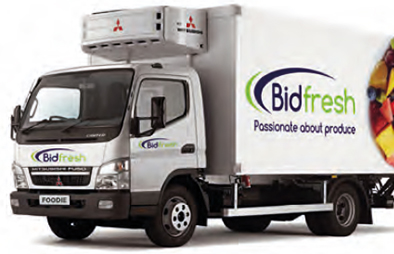
Bidfresh’s performance was below the previous year, impacted by a “stressed casual dining” customer base. Trading became particularly tough in Q4. Supplier bankruptcies were disruptive. Seafood grew and margins improved. Meat recorded losses, however, these are reducing as the top-line gains scale. Produce struggled to cope with change following its new depot expansion and IT implementation. National Accounts are holding up as customers look for savings but independents face challenges with both drop-size and spend falling. Overall costs were well controlled.
Europe
Europe continues to perform well, with most businesses delivering higher revenues and solid trading results. Our Eastern European businesses have shown record revenue growth, but have experienced wage pressures throughout the region. Revenue rose 12,7% to R43,7 billion (F2018: R38,7 billion) while trading profit rose 15,0% to R1,9 billion (F2018: R1,6 billion).
Netherlands continued to improve despite a tightening labour market. Trading profit growth and margin improvement was pleasing. Its business simplification journey with product range rationalisation and IT infrastructure reconfiguration is starting to benefit the overall cost base. Investment into future capacity will be undertaken.
Further gains in the horeca channel more than offset a slowdown in other areas of the business, notably the health and care and catering sectors. Focus on the freetrade sector is being supplemented by import activities and delivering increased customer value.
Belgium performed well in both the horeca and institutional segments. Sales were above budget and F2018 and gross margins improved. All customer segments showed growth, except the Catering channel. Private label product development continues and the roll-out of our ecommerce customer offering is ongoing.
Italy performed strongly despite macroeconomic uncertainty. The integration of the D&D acquisition made in F2018 continues. Growth in the freetrade sector supported pleasing sales and trading profit. Sales within the Group continue to grow.
Czech Republic and Slovakia delivered another excellent performance. Increased sales, higher prices and better margins offset significant wage pressures, driven by labour shortages. Timeous investments in distribution and production facilities were beneficial to ensure we can effectively service our growing customer base. The Czech economy is influenced by greater Europe, whose growth is slowing but we are confident we can maintain momentum.
Poland continues to go from strength to strength, registering record sales. Strategic investments in infrastructure in previous years and management’s portfolio focus on the freetrade sector provided the base for the excellent performance. The National Accounts segment improved margins through dedicated contract management. Wine is growing into an important category and the business is also expanding into spirits. Smart Food, the subsidiary that serves Asian restaurants, is expanding its geographic reach. Ecommerce initiatives are developing and are expected to assist further growth going forward.
Iberia’s overall performance was poor. Frustock (Portugal) was good, however, Guzmán (Spain) underdelivered. Progress in Spain is being made internally on improving the business platform and IT systems. Barcelona as a region is still economically “soft’’, offset by good growth in Madrid and Lisbon. Management's focus in F2020 will be on growing the independent customer base and cost reduction. Igartza, acquired in August 2018, performed well.
Baltics achieved double digit sales growth, driven by a strong foodservice focus. Completion of the new depot in Kaunas provides the base from which to grow. Both Latvia and Lithuania recorded a trading profit.
Germany remains a business in transition as we structure the platform ahead of any regional expansion. Sales ticked up, gross margins were maintained but expenses remained too high. Additional management support has been deployed to assist our local operators. Germany remains an attractive market opportunity for us.
Emerging Markets
Emerging markets continued to navigate challenging economic and political headwinds, however, staged a strong recovery by year-end. Overall revenue was up 13,1% to R21,1 billion (F2018: R18,7 billion), with trading profit marginally up at R1,0 billion (F2018: R1,0 billion).
Africa delivered an improved second half performance, with trading profit marginally up for the whole year. Difficult economic conditions have curtailed consumer spending with cost pressures rising well above food inflation. Bidfood delivered excellent results under the circumstances and Crown Food Group (CFG) achieved a second half recovery. Chipkins Puratos (CP), our 50% equity-accounted joint venture (JV), experienced a tougher latter part of the year. All businesses grew volumes in their targeted channels, but margins were under pressure.
Bidfood secured further street trade gains, benefiting from real volume growth and better margins. National Accounts declined slightly impacted by competition and weaker demand. Industrial catering sales rose, however, credit to the channel was carefully managed. Expansion of the MyBidfood ecommerce platform continues. Private and exclusive label products remain a differentiator for Bidfood. At CFG, the impact of the listeriosis crisis was reduced by the growth in the wholesale and independent channels. The Six Bar acquisition is performing well. CP was impacted by lower yeast offtake due to declining bread sales but bolstered by good sales of own-manufactured products. The state-of-the-art wet plant was commissioned, however, start-up losses impacted profitability.
Greater China faced pressures which significantly impacted overall profitability. Sales gains were realised and margins held up but trading profit fell as expenses became significantly higher to expand our product offering following the loss of our cornerstone dairy products agency in F2018. Dairy remains an important category, however, diversification of the supplier base continues. A recovery was evident with a strong last quarter. In mainland China, our geographic distribution network is reasonably complete. The Guangzhou Meat factory commenced operations in the last quarter which is an important milestone in our product diversification. Miumi, the Japanese food business, delivered a strong performance.
Hong Kong and Macau introduced new brands into the portfolio while stepping up investment into production centres. The hotel and restaurant channel and Chinese cuisine remain opportunities for mainland operations. The business is well poised to resume its growth strategy, however, the fallout from ongoing protests in Hong Kong are unquantifiable at this stage.
Singapore achieved gains but trading profit growth was impacted as a result of our Vietnam start-up costs. The Vietnam JV became operational late in the year. Singapore is now a predominantly foodservice business with exports, marine and commodities having been scaled back. Malaysia performed well, growing sales and margins.
Chile benefited from the October 2018 acquisition of Foodchoice, giving the business a national presence. Integration and efficiency extraction continue. Organic growth remained an important driver as processed meat and seafood categories were expanded. The acquired Temuco and Antofagasta branches added to momentum.
Brazil achieved strong sales growth. Both the Irmãos Avelino and Mariusso components of the business reported solid trading profit growth. Recent political change has yet to manifest in higher economic growth, however, consumer sentiment is positive. Refinement of the business model continues to enable sales growth and expansion of the broadline product range. Further capital expenditure is planned to cater for growth. Bolt-on opportunities are being pursued, however, vendor expectations remain unrealistic. The introduction of own-brand products in numerous categories is gaining momentum.
Middle East delivered an excellent performance, surpassing previous levels of profitability. Sales and trading profit exceeded expectations while margins rebounded. UAE secured a significant agency which impacted working capital in the second half. Al Diyafa, the Saudi Arabian JV, recorded very pleasing results, driven by new account gains and better product mix.
Turkey recorded good sales gains. A small trading profit was achieved which is an improvement on the comparative year. Izmir-based EFE continues to perform well. The weak Turkish lira compounded difficult trading conditions. Opportunities for regional expansion are under consideration.
Discontinued operations
Bidcorp classifies all of its UK logistics’ activities as discontinued, the details of which are reported below.
UK Contract Distribution (CD)
Performance continued to improve in the second half of F2019. Service levels are significantly better and customer pricing has been substantially increased to better reflect the risk and reward of these activities. A much-improved financial result is expected in F2020.
Bidcorp’s sale process for this business is hopefully nearing finalisation.
PCL distribution business (PCL)

Trading in PCL’s dairy distribution ceased in April when Arla acquired this business. Accordingly, the intangible asset associated with this contract was fully impaired and significant further costs associated with the exit were incurred in the second half, particularly vehicle fleet disposal costs. A further warehousing contract is in the process of disposal, however, no further material costs are expected into F2020.
BL Berson
Chief executive
DE Cleasby
Chief financial officer
30 years of food,
service and
technology.