



 33 / 166

the businesses. Management consciously
sacrificed some margin in order to maintain
volumes. In addition to margin pressure,
significant overhead increases in wages,
insurance and IT costs were experienced.
The Seafood businesses experienced
pressure on revenue and margin, but
recovered well in the final quarter. Salmon
prices have been volatile throughout the year
with some levelling off in the last quarter.
White fish prices have been getting firmer as
the year progresses but we should see relief
with the new quota season.
The Produce businesses had stable results.
Margin pressure early in the year from a
poor UK potato harvest, the poor weather
in January and February affecting crops
in Spain and surrounding areas, and the
dramatic shortages in milk solids affecting
butter, and more recently cheese, has been
offset by strong sales growth.
The Meat businesses had mixed results.
Plans are under way to expand capacity,
build more unified buying strategies, and
exploit the greater business reach across
the country.
Logistics
performance continued to
disappoint, with trading profit well below
that of the prior year, though a marginal
improvement in sales volumes was achieved.
Margins remained under pressure as
the number of deliveries for major quick-
service-restaurant (QSR) chains fell below
expectation. The business exited a major
QSR account in the fourth quarter.
Costs relating to handling and storage rose
due to weak management. Vehicle leasing
costs also moved higher following new
investment in the fleet.
In PCL247 Transport, sales and margins
also moved lower as the number of routes
operated fell by 23%. The Aylesbury dairy
became fully operational, but this additional
volume could not offset the closure of two
other dairy sites. As a consequence of lower
activity, Trafford Park distribution centre will
be closed, the costs of which have been
accrued accordingly.
Logistics remains a non-core activity and
management remains committed to finding a
viable solution for the future of the business.
Underperformance has necessitated further
management changes, the benefits of which
should stabilise results going forward, in the
most cost-effective means necessary.
Significant effort and costs have been
expended in resolving the management
irregularities that were reported on during the
previous financial year. These irregularities
remain the subject of ongoing legal
processes. As a consequence of a part
resolution of these issues, management has
impaired the goodwill associated with the
PCL247 Transport business by £9 million.
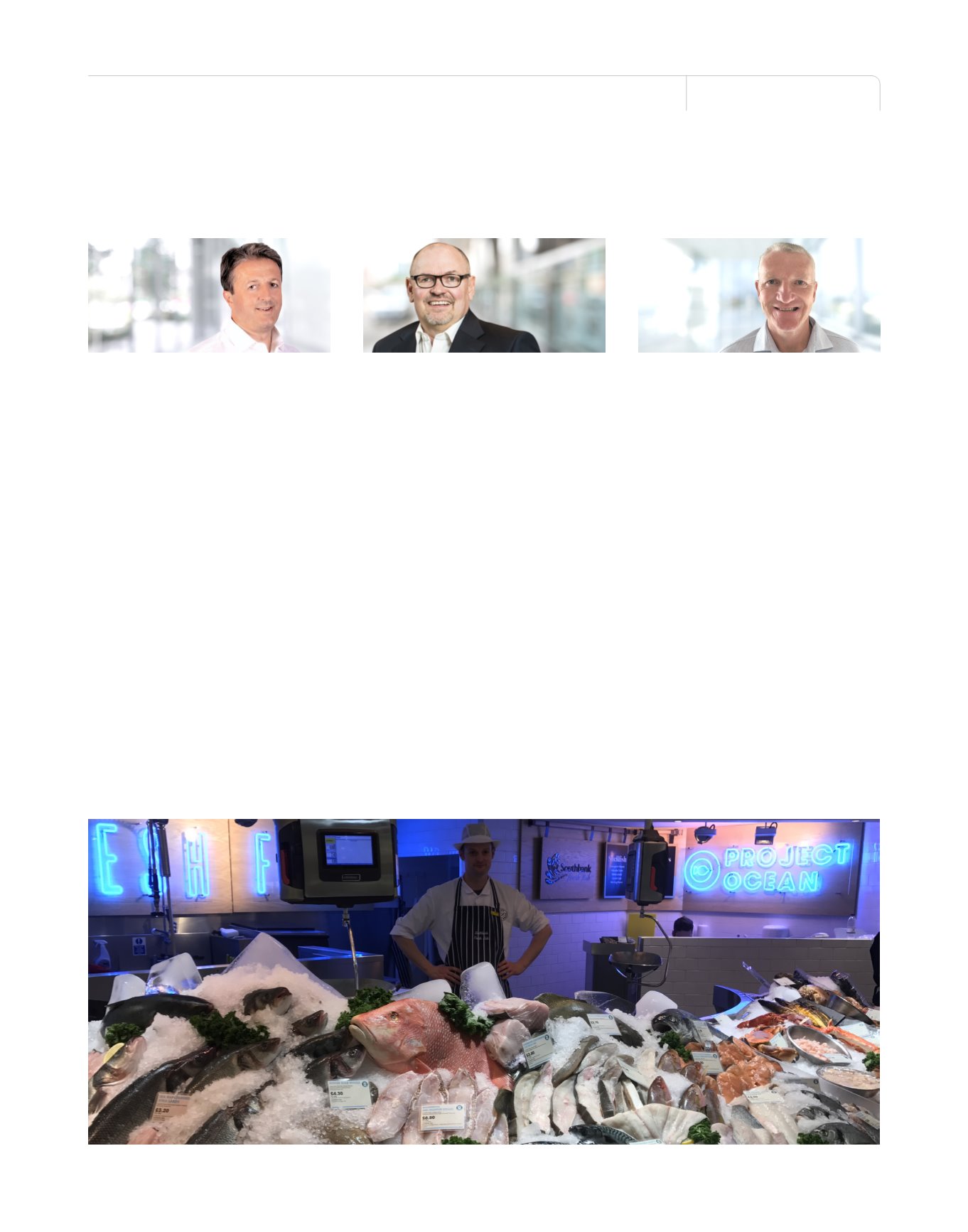
Andrew
Selley
Bidfood UK
Stephen
Oswald
Bidfresh UK
Grant
Cox
Logistics UK
Chief executives
29
Annual integrated report 2017
Bid Corporation Limited